Breaking Barriers – How to Create Opportunities for People with Disabilities in the Labour Market
Author: Petra Schwarz Koutská for Business for Society
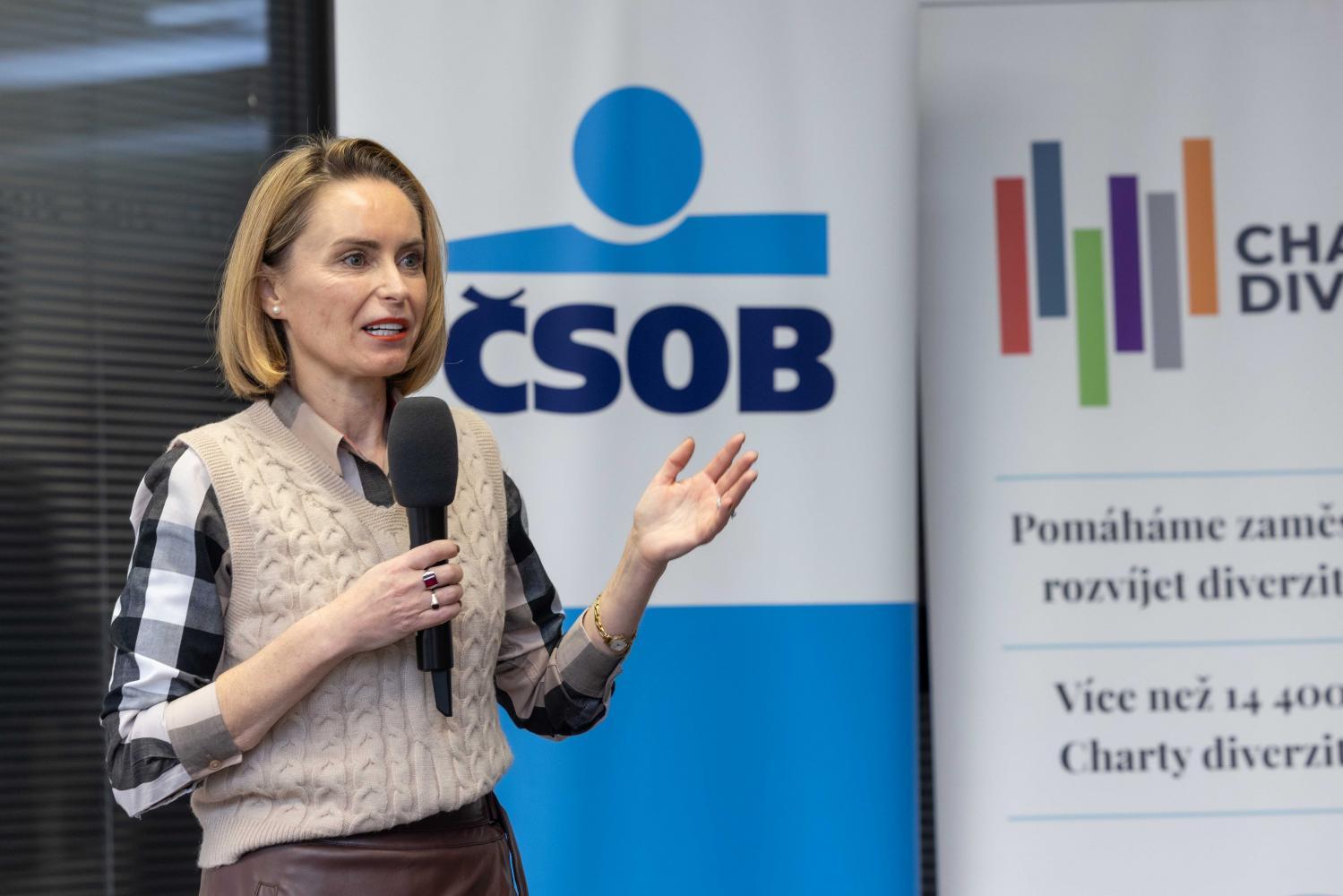
Around 1.3 million people with a “health disability” live in Czechia. According to estimates, only about half of them are employed, compared with 85% of the working majority population. Why do many companies prefer substitute fulfilment or paying contributions to the state budget instead of employing people with disabilities? This was discussed by employers and the expert public at an event organized by Business for Society within the Diversity Charter, together with ČSOB, a.s., the partner and host of the event.
“When we started employing people with disabilities through social enterprises around 2008, there was no clear legislative framework, so for a long time we were looking for partner social enterprises. In my view, it is essential to get to know individual enterprises from the inside and verify what added value they actually provide for people with disabilities. Since then, we have managed to employ a number of people and, in their own words, change their lives. It is important to remove unnecessary prejudices and fears within teams, and to communicate openly about each person’s situation,” said Markéta Cechman, Executive Director Shared Services & Operations, ČSOB, a.s.
In 2024, the bank was recognized as a TOP Responsible Company in Diversity for its ČSOB Without Barriers project. “At ČSOB, people with disabilities currently make up 1.5% of our employees. In cooperation with social enterprises, around another 100 people with disabilities work with us, and we also use other forms of substitute fulfilment. One of the tools we apply is also to encourage colleagues not to be afraid to disclose a health disability, which often happens,” said Stanislava Slavíková Bízová, Executive Manager Procurement of Property and Services, ČSOB, a.s. According to her, it is necessary to strengthen the recruitment of people with disabilities for specific positions and to work closely with social enterprises.
In Czechia, every company with more than 25 employees is legally required to employ at least 4% people with disabilities. There are 22,000 such companies in the Czech Republic. If this is not possible for some reason, instead of directly employing people with disabilities, companies may purchase goods or services from suppliers that employ at least 50% people with “health disabilities”. Otherwise, the company must pay a contribution to the state budget – in effect, a kind of “exemption fee” for failing to meet its statutory obligation.
Many companies are afraid to employ people with disabilities, assuming that they will require special conditions and treatment, that they will often be ill or frequently visit doctors, and therefore will not be productive.
“Even healthy people are not perfect: they are not healthy, team-oriented and motivated nonstop. Many of us will find ourselves at some point in life in a situation where, for example, we cannot work eight hours a day. This also applies, for instance, to people after treatment for serious illnesses. Work flexibility and an individual approach can therefore increase the employment of people with disabilities in companies,” adds Markéta Cechman.
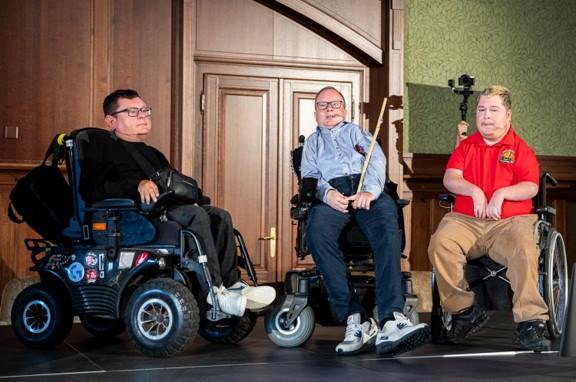
At the conference, people who have long-term work experience as persons with disabilities also presented their personal stories. Petr Burda, who performs under the artistic pseudonym Stounman29, recalled how progressive the Metropolitan University Prague, where he studied, had already been in its approach to people with disabilities 15 years ago. At the time, they offered him a special computer, a voice recorder and other technology that made his studies easier. Nevertheless, many people with disabilities still have limited access to information and communication technologies that would enable them to participate more fully in society.
There is also a noticeable lack of support and assistance services. “I would need assistance for most of the time, but I can only afford it for a few hours a day,” says Petr Burda , explaining what this means for him: “It happens that in winter, for example, I come home and have to stay in a heated flat wearing my winter jacket and winter clothes until the assistant arrives. Assistance costs me over CZK 40,000 a month, even though I am trying to work. Even so, it only covers part of my actual need for assistance.”
But there are many more stories like this. If we want to move forward, it is essential to open a discussion on changes to the current system together with all stakeholders. The principle of equity needs to be applied more widely, which, simply put, means assessing people’s needs individually, according to their current health, economic and social situation. The scope of support should then be adapted accordingly.
Responsible companies in Czechia are changing the paradigm
One of the companies where diversity and inclusion are fundamental pillars of the overall strategy is IKEA. Here, part of the corporate culture is the understanding that teams are enriched through openness and empathy. Whether this concerns parents, people over 50, refugees, seniors, LGBTQ+ people, or people with disabilities.
“Since 2022, we have managed to increase the share of employed people with disabilities from 1.5% to 4%,” says Iveta Kostincová Kutišová, Head of Communication Operation at IKEA Group. “The company has become more open to job opportunities for people with health disadvantages, and we have removed unnecessary internal barriers,” she explains.
“For example, we reviewed internal procedures and all workplaces. We trained managers and employees. Each unit has an integration worker and integration mentors,” she adds. “Our career pages have a section dedicated to vacancies for people with disabilities, and the recruitment process emphasizes the individual needs of the employee. We cooperate with Labour Offices and the non-governmental sector,” concludes Iveta Kostincová Kutišová.
An interesting project was presented by DHL Supply Chain under the name Silent Shift, which was successful at this year’s Diversity Charter Awards 2025. The employment of deaf and hard-of-hearing people began there during Covid, when the company was expanding its e-commerce operations and needed to look for new employees in logistics – that was when cooperation with the Tichý svět platform began. “We carried out standard DHL training in sign language and arranged interpreting for onboarding so that we could be effective. Today, these people are fully integrated in the company and they are loyal employees,” explained Radka Barcalová and Barbora Fuchsová.
The employment of people with disabilities is also being advanced by Nestlé, which operates in 185 countries. In Czechia, it also seeks inspiration from good practice in neighbouring Slovakia, where the employment of people with disabilities is somewhat more successful. “We understand that diversity and inclusion increase the pool of people we can choose from and help us attract great talent,” says Barbora Soukupová, Senior Talent Partner at Nestlé Czechia.
“We also cooperate with the non-governmental organization O Krok s.r.o., which helps us with recruitment, and we have also carried out an internal audit of our premises. We train employees, and for managers we have issued an internal guide on how to work with people with disabilities,” adds Barbora Soukupová.
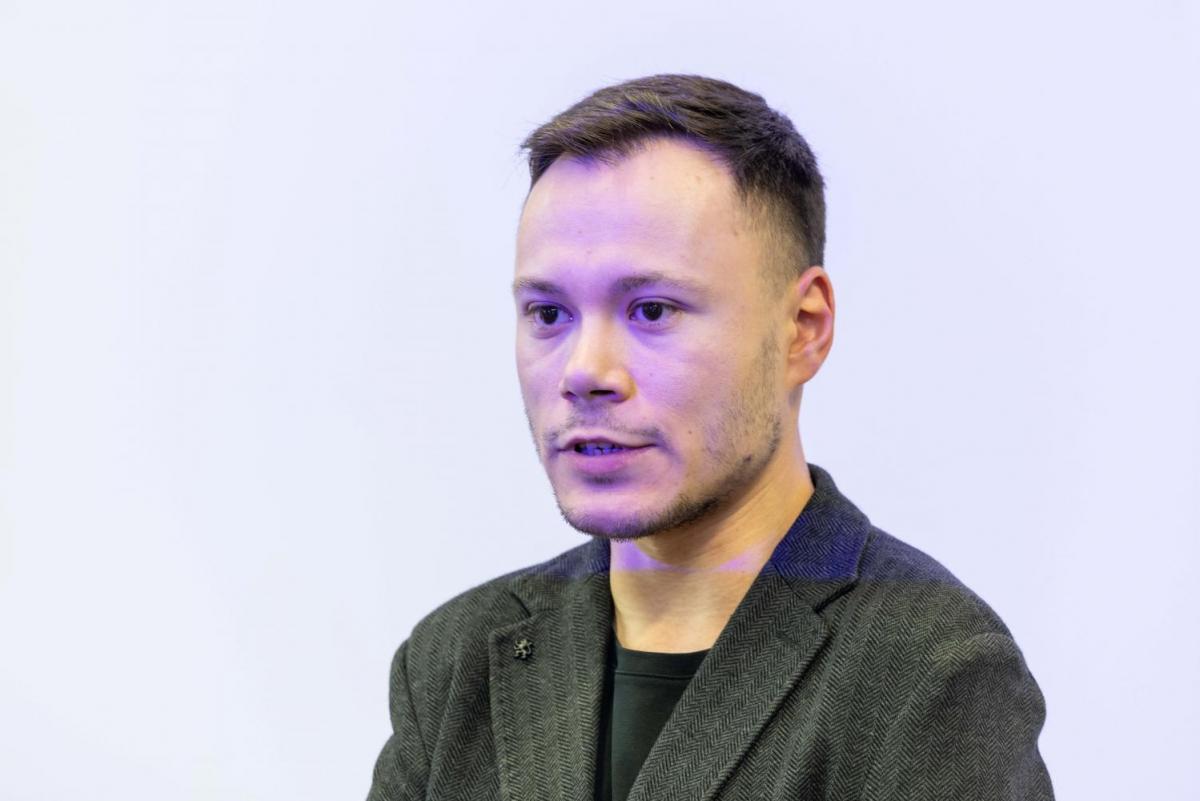
Robert himself lives with a disability, yet he is developing business for Good Sailors in the United States. His example shows the enormous added value a person with a disability can bring to a company. He speaks about his work with such enthusiasm and expertise that it completely draws you in, and you forget about the disability altogether.
“Sometimes the mere presence of people with disabilities in a meeting is enough – perspectives automatically change and unnecessary issues are no longer discussed. Complete openness helps. I learned that already as a child. When you say straight away what your situation is, that is the best approach,” says Robert. Thanks to his passion for games, he once started inventing his own tools so that he could play. Today, thanks to a joystick, he is even able to drive a car.
According to Robert Balušík, accessibility features open the market to millions of people and also mean additional profit. In the gaming industry in the USA alone, approximately 46 million people with some form of limitation play games. Of these, 20 million have a physical disability, 15 million have a cognitive disability, and 8 million are deaf.
“For roughly an additional three percent of the budget, you open your product or service to a huge group of people. And when accessibility is considered from the very beginning, it is not an additional cost – it is simply inclusive design,” he adds.
Companies’ exemption payments must become more costly
Since 1 January 2025, new rules have applied to the employment of people with disabilities, aimed at simplifying administration and motivating employers to employ them directly. Ondřej Závodský from the Ministry of Labour and Social Affairs explained how, through the new amendment to the Employment Act, the Ministry is trying to motivate companies to employ people with disabilities and to use substitute fulfilment correctly. Priority is given to direct employment or employment within the protected labour market. If the nature of the work or working conditions do not allow this, for example in operations or production, substitute fulfilment can be used. It is also necessary to strengthen the social dimension and responsible behaviour of employers so that they understand the purpose of this law.
Economist Petr Bartoň showed that today only 2% of the total state budget, which exceeds CZK 2,000 billion, goes to supporting people with disabilities, including disability pensions. Although the allocation of money from the state budget is always the subject of passionate debate, here we would probably all agree, including economists, that this is the one expenditure everyone can defend. We all want to receive some form of help and support if we need it. As Petr Bartoň pointed out: “If the goal is to increase the employment of people with disabilities, we need to focus more on reducing the attractiveness of so-called buying exemption payments, meaning direct contributions to the state budget.”
“Substitute fulfilment from social enterprises or sheltered workshops does not need to be adjusted so much; they are specialists in employing people with disabilities with varying degrees of health disadvantage, and they should not be punished by tightening the rules. If any of them circumvent the law, they should be sanctioned directly. The focus should be on motivating the employment of people with disabilities also outside specialist organizations,” adds Petr Bartoň.
People with disabilities are not a limitation; they are a hidden opportunity. They bring their unique abilities and a new perspective on things. When we give them space and include them in teams, it pays off not only economically, but above all socially. Companies gain loyal and motivated employees, and society as a whole becomes more open and welcoming as a result.
“It is not the disability that disadvantages a person, but the environment around them.”

BPS – Byznys pro společnost, z. s.
V Tůních 1357/11, 2nd floor
Praha 2, 120 00
Tel.: +420 739 717 789
info@byznysprospolecnost.cz
www.byznysprospolecnost.cz
Co-funded by the Rights, Equality and Citizenship Programme of the European Union